
Sean Broderick Christine Boynton March 25, 2024
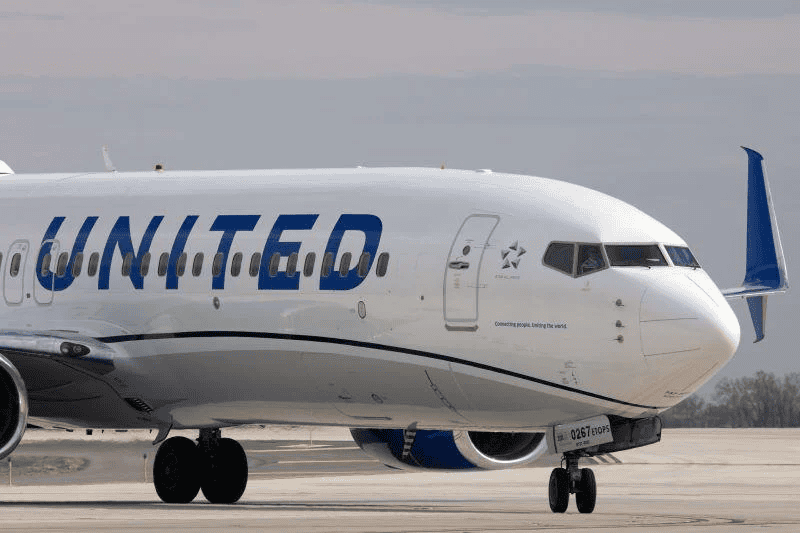
Credit: United Airlines
United Airlines is facing potential operational restrictions from an FAA review of its activities, an enhanced oversight measure prompted by a series of operational incidents.
“The number of safety-related events in recent weeks have rightfully caused us to pause and evaluate whether there is anything we can and should do differently,” United VP-Corporate Safety Sasha Johnson said in a March 22 memo to employees. FAA will now “review some of our work processes, manuals, and facilities,” she described, and will also pause “a variety of certification activities” for an undisclosed period of time, with those activities differing among the airline’s work groups.
United said it expects to learn more from the FAA on potential effects to its certification activities – such as adding aircraft to its fleet or getting new routes approved – soon. Its growth plan is already challenged by Boeing delays, mainly the certification of the 737-10; the airline could face additional constraints should the FAA find reason to impose risk-mitigation measures. The airline has already projected its growth rate to slow in the coming years, pointing to MAX constraints.
“Due to recent safety events, the FAA is increasing oversight of United Airlines to ensure that it is complying with safety regulations; identifying hazards and mitigating risk; and effectively managing safety,” the agency said in a statement. “Certification activities in process may be allowed to continue, but future projects may be delayed based on findings from oversight. The FAA will also initiate an evaluation of United Airlines under the provisions of the Certificate Holder Evaluation Process (CHEP).”
Neither the FAA nor United would discuss details of its CHEP or related agency actions.
Prior to the FAA’s announcement, United Airlines CEO Scott Kirby had acknowledged the recent string of incidents, ones he stressed were unrelated, in a March 18 email to customers.
Garnering mainstream attention amid heightened industry scrutiny following the January inflight loss of an Alaska Airlines 737-9 exit door plug, the additional incidents include the March 15 discovery of a missing panel during post-landing inspection on a 737 at Medford Airport in Oregon; a March 8 taxiway excursion by a 737 upon landing in Houston; and the March 7 loss of a wheel from a 777 departing San Francisco.
None of the incidents were unusual or resulted in reported injuries. Viewed together, however, they suggest a closer look at United’s organization-wide safety management programs is warranted, particularly amid the FAA’s year-long quest to flag precursors to occurrences.
Kirby vowed heightened scrutiny on its safety and maintenance protocols in the recent customer message, pledging also a centralized training curriculum for new-hire maintenance technicians and more resources dedicated to supplier network management.
A local council of the Air Line Pilots Association (ALPA), the union representing United’s pilots, suggests that aggressive growth targets from the airline have contributed to an erosion of safety culture. Now that the FAA has stepped in, “We have lost the ability to approve new Line Check Pilots, issue type ratings, and have regulator-imposed restrictions on our ability to operate and grow our airline,” wrote UAL Council 150 in a message to its members.
“The rapid execution of United Next and its promise of financial windfall has been blindly setting us up for this failure, despite our warnings to them which have previously been brushed aside.
Hopefully, the FAA action will open some of their eyes and ears to the pitfalls within the changes they steadfastly pursue.”
An ALPA Master Executive Council spokesperson confirmed the local council’s message was authentic but could not validate its contents.
Introduced in 2015 as part of FAA’s Safety Assurance System that sought to standardize oversight of commercial carriers and repair stations, the CHEP is a codified process for examining a certificate holder’s operations. Evaluations are done periodically – every five years or so for major airlines – regardless of circumstances. The FAA’s Certification and Evaluation Program Office administers the program and periodically reviews databases to monitor risk.
“This review might flag certificate holders deemed to be ‘higher risk’ and could cause the National CHEP Team to alter its scheduling priority,” a December 2023 FAA report to Congress explains.
Updated FAA guidance issued in August 2023 lists 17 circumstances that “may” warrant a CHEP evaluation. Among them: “accidents/incidents/occurrences” and “rapid expansion or growth” – both of which could apply to United. Evaluations are done by a team of FAA safety inspectors and, in many cases, representatives for the certificate holder.
Revised CHEP review guidance came following a 2019 Transportation Department Office of Inspector General (OIG) report on the FAA’s oversight of Allegiant Air. The FAA in 2016 fast-tracked an Allegiant CHEP in response to a series of incidents. The OIG audit found CHEP inspectors missed some key issues due largely to a lack of adequate FAA instruction. OIG recommended the FAA update its guidance to close the gap.

Senior Air Transport & Safety Editor Sean Broderick covers aviation safety, MRO, and the airline business from Aviation Week Network’s Washington, D.C. office.

Christine Boynton is a Senior Editor covering air transport in the Americas for Aviation Week Network.