
Sean Broderick March 25, 2025
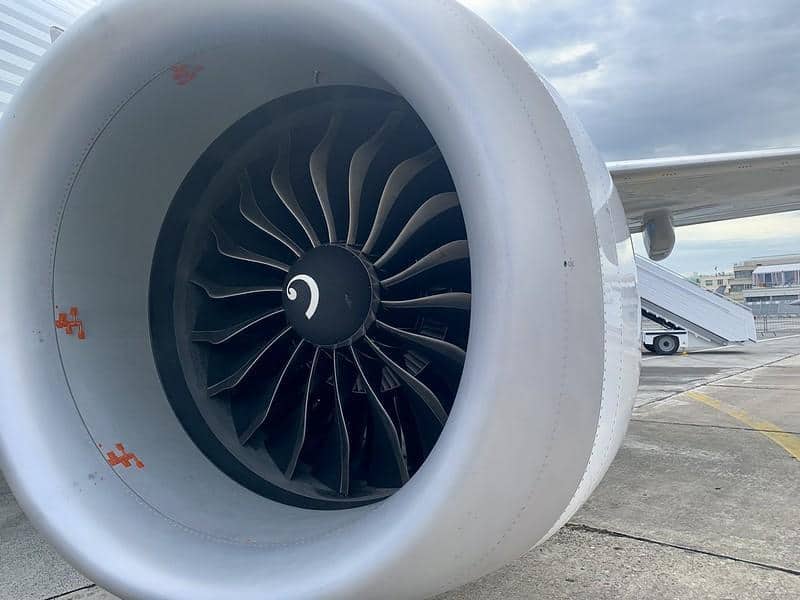
Credit: Sean Broderick/Aviation Week Network
An engine control software change that will address in-aircraft smoke risks following major Boeing 737 MAX CFM Leap 1B engine failures is slated to be available in 2026, Boeing told operators in a recent bulletin.
The change, being developed by both Boeing and engine-maker CFM International, will update electronic engine control (EEC) software so that an engine bleed air valve closes automatically if the associated engine’s load reduction device (LRD) activates. “This software is undergoing testing and certification and is expected to be available in 2026,” according to an update from one 737 MAX operator issued to its pilots and shared with Aviation Week.
The LRD activates when an engine fan is severely damaged, such as in the instance of a bird strike. It separates the fan rotor from the rest of the engine so the fan’s vibrations do not damage the surrounding structure. On the Leap 1B, an LRD activation also opens an oil sump, which releases oil into the engine flow path ahead of pneumatic bleed ports that direct air into the aircraft for pressurization and temperature control.
Two bird strike incidents involving Southwest Airlines 737-8s – one near Havana, Cuba, in March 2023 and one near New Orleans in December 2023 – spotlighted the smoke-related risk of an LRD activation. Some pilots and officials in the FAA’s Office of Accident Investigation (AVP-110) expressed concern that smoke in the cockpit during an engine failure presents unacceptable risk. AVP-110 in a set of internal recommendations asked the agency to mandate procedural changes until a permanent fix, such as the EEC update, was available.
The FAA convened a multi-agency safety review and determined that Boeing’s planned changes combined with additional pilot guidance was sufficient. The guidance, issued late last year, provides more specific directions for checklist usage in certain engine failure scenarios.
The Allied Pilots Association (APA), which represents pilots at 737 MAX operator American Airlines, has been the most outspoken among U.S. pilot groups. While news of a fix with a general timeline was well-received, lingering uncertainty over the timeline’s specifics and the effectiveness of interim measures has the union wary.
“We have not been told when in 2026 the software change will be available,” APA spokesman Dennis Tajer said. “If this redesign is going to take at least a year or longer before it’s even available, we are concerned about how long it will take to be installed on the aircraft flying today. We’ve already had two LRD smoke and fume events within nine months of each other, so based on that in-the-field occurrence rate, we will likely have several more before this fix is installed.”
The FAA’s review determined “the issue does not warrant immediate action,” it said in November, adding that it would use its standard rulemaking process – in this case, likely issuing an airworthiness directive to require installation of the software change – to address the issue.
Alaska Airlines’ pilots are among those expressing confidence in the process.
“LRD activation, having occurred only twice across the entire Leap 1A/1B fleet with over 25 million in-service hours, remains extremely rare,” a message to Alaska pilots from their Air Line Pilots Association Master Executive Council (MEC) leadership said. “While our recent manual revision included minor [checklist and handbook] updates, staying proficient and following procedures remains the best defense for responding to an LRD event.”
The Seattle Times was first to report the Alaska MEC message.
Boeing continues to work with investigators probing both Southwest incidents and is “following regulatory processes to properly address potential issues and ensure the continued safety of the global fleet,” the company said in a statement. “We are also staying in contact with operators and pilots and will keep them informed of any approved changes to operating procedures.”
It declined to address the software changes or expected timeline.
CFM declined to comment, citing the ongoing investigations.
Tajer confirmed American’s pilots have been issued updated information that includes the planned software fix. This follows Boeing instructions issued in December that match checklists with specific scenarios. What the pilots have not seen is rationale for not implementing more aggressive short-term measures.
“Knowing that a fix is coming is good,” said Tajer, an American 737 captain. “It’s not good that the FAA has rejected its internal AVP-110 emergency safety recommendations,” which included interim procedural changes to reduce smoke ingestion risk following an LRD activation.
“Without further details from Boeing and the FAA about why interim mitigation procedures are unwise, we are challenged to understand why directing preventive procedures are not the best path forward,” Tajer added. “The absence of interim mitigating procedures remains a serious concern.”

Senior Air Transport & Safety Editor Sean Broderick covers aviation safety, MRO, and the airline business from Aviation Week Network’s Washington, D.C. office.