US & BBC news – Thanks to Paul Mathis and Toni Crayton
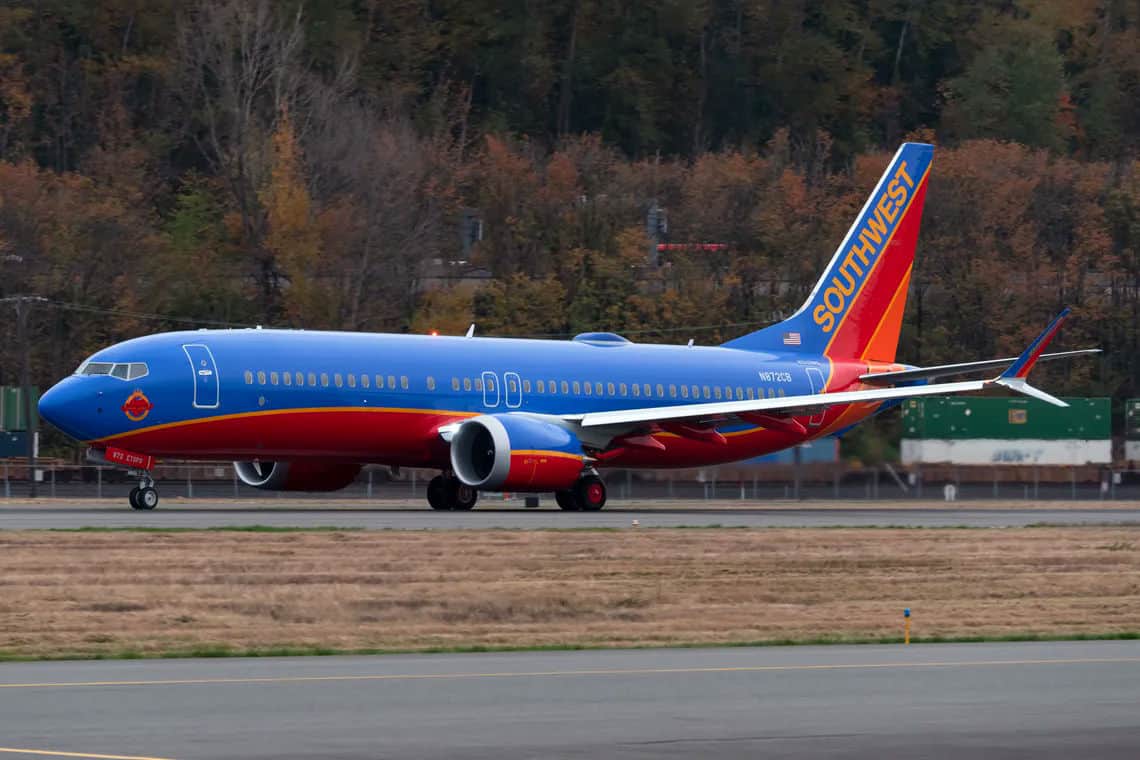
On May 25th, the aviation community was jolted by an unexpected event involving a Boeing 737 Max 8 jet, which encountered a rare and potentially dangerous phenomenon called a Dutch roll. This event, which occurred less than an hour into Southwest Airlines Flight 746 after its departure from Phoenix, is now the subject of an in-depth investigation by the Federal Aviation Administration (FAA). As the aircraft cruised at an altitude of 32,000 feet, it began an uncontrolled side-to-side yawing motion, a situation that the pilots managed to control before safely landing the plane in Oakland.
What is a Dutch Roll?
A Dutch roll is an oscillatory motion that combines yawing (side-to-side movement of the aircraft’s nose) and rolling (tilting of the wings). While it can be disorienting for passengers and challenging for pilots, modern aircraft are equipped with advanced systems designed to prevent such occurrences. The fact that a Dutch roll happened on a Boeing 737 Max 8 – a state-of-the-art aircraft – is notable and concerning, prompting a thorough investigation.
Preliminary Findings
According to a preliminary report from the FAA, the incident was linked to damage to a backup power control unit (PCU), which controls the rudder movements on the plane’s tail. This control unit is crucial for maintaining the aircraft’s stability, and any malfunction can have significant implications for flight safety. The Boeing 737 Max 8 involved in the incident is relatively new, having been in service for less than two years. This raises questions about whether the issue was a result of a manufacturing defect, a maintenance oversight, or an unforeseen anomaly.
In response to the incident, the FAA has launched a comprehensive investigation, working closely with Boeing and the National Transportation Safety Board (NTSB). The FAA has assured that they will take appropriate action based on their findings. The investigation’s goal is not only to determine the root cause of the Dutch roll but also to prevent such incidents in the future.
Interestingly, earlier versions of the 737 were also involved in several accidents in the 1990s, which were ultimately attributed to problems with the tail rudder. This historical parallel highlight the importance of continuously improving aircraft design and maintenance protocols to ensure safety.
Industry Reactions
Shem Malmquist, a seasoned commercial pilot and an instructor at Florida Tech, emphasized the rarity of Dutch rolls in modern aviation. “A Dutch roll is definitely not something that we like to see,” he stated, highlighting the significance of the incident. Malmquist highlighted the critical role of pilot training in managing such rare occurrences. “In this case, the pilots’ training was really, really critical. They were able to handle the situation and land the plane safely,” he added.
The Boeing 737 Max 8 involved in the incident remained grounded in Oakland until June 6th, when it was flown to Everett, Washington, for further inspection and maintenance by one of Southwest’s maintenance vendors. Southwest Airlines has not commented on the incident, referring all inquiries to Boeing, which in turn is cooperating with the FAA’s investigation.
The Dutch roll incident involving the Boeing 737 Max 8 highlights the continuous challenges and complexities of ensuring aviation safety. While the FAA’s investigation is ongoing, the incident serves as a reminder of the importance of robust design, thorough maintenance, and rigorous pilot training. As the aviation community awaits the final report, the priority remains clear: understanding the cause to prevent future occurrences and maintaining the trust of passengers and regulators alike.